
Get a Free Quote
Thank You!
We'll get back to you shortly. For immediate help, call (855) 473-5280.
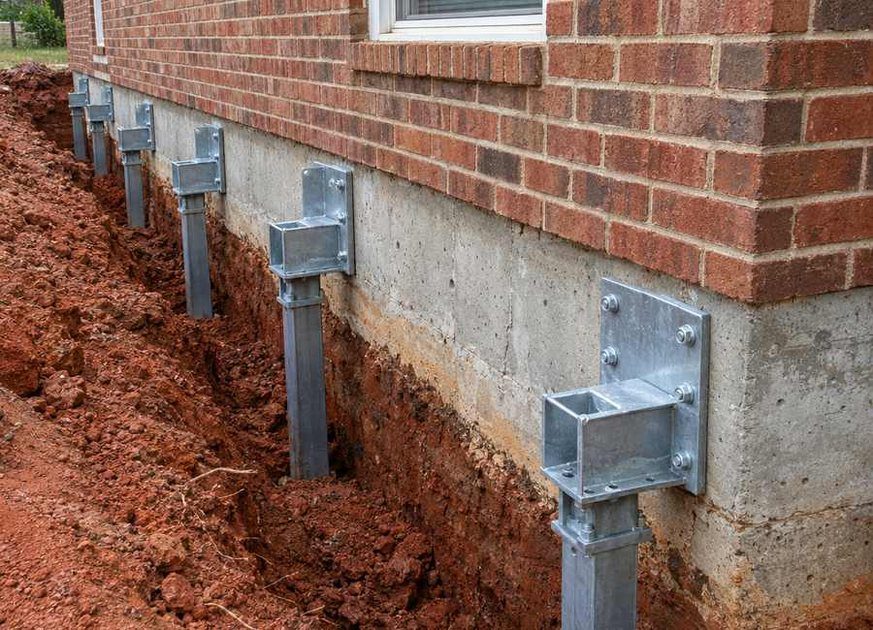
Foundation Repair Asheville stabilizes and repairs settling, cracking, and bowing foundations for homeowners across Asheville and Western North Carolina. When your home shows the signs, stair-step cracks in the brick, doors that stick, floors that slope, or a basement wall starting to bow, we find what is actually moving under the house and fix it with the right method: helical and push piers for settlement, foundation crack repair, basement wall reinforcement, and concrete leveling for sunken slabs. Every job starts with a free, no-pressure foundation inspection.
Foundations move differently in the mountains than they do on flat ground. Asheville sits in the Blue Ridge, where the bedrock weathers into deep saprolite, the soft, red-clay-rich soil the whole region is built on, and homes are often cut into steep slopes. That soil holds water, shifts and creeps downhill, and loses support under a footing, which is what pulls a mountain foundation out of level. Add the heavy rain this part of the state is known for, and the ground under your home rarely sits still. The fix is not cosmetic, it is engineered support carried down to stable ground.
Foundations rarely fail all at once. These are the warning signs we see most on Asheville-area homes, and what each one usually means.
Cracks that climb the mortar joints in a stair-step pattern are the classic sign of settlement. As one part of the footing drops, the brick or block veneer tears along its weakest line. The wider the crack, the more the foundation has moved.
Doors that suddenly stick, drag, or will not latch, and windows that are hard to open, often mean the frame around them is no longer square. When a foundation settles, it racks the openings above it out of alignment.
A floor that slopes, dips, or feels like it rolls underfoot points to support lost below it. On Asheville's hillside lots, one side of a home can settle faster than the other, tilting the floors noticeably.
Cracks running from the corners of doors and windows, or where the wall meets the ceiling, are the inside view of a foundation moving outside. The ones that keep coming back after you patch them are the ones to take seriously.
A wall that bows inward, leans, or shows a horizontal crack is under pressure from wet, heavy soil pushing against it. This one does not wait, the wall is failing and needs reinforcement before it gives.
Gaps opening around window frames, trim pulling away, or a chimney separating from the house all mean parts of the structure are moving independently. A chimney leaning away from the home is settlement you can see from the yard.
Five services that cover the whole job, from stabilizing a settling foundation to lifting a sunken slab.
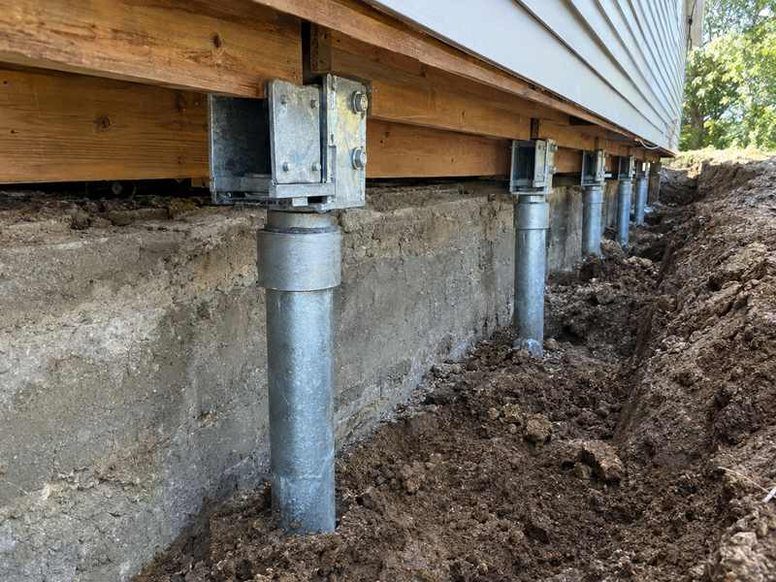
Foundation repair is the whole job: diagnosing why a home is moving and stabilizing it so it stops. Most Asheville foundations fail because the soil under a footing loses support, from slope movement, saturated clay, or a footing that was never deep enough, and the house follows the ground down. We read the pattern of cracks and the slope of the floors to find where the support was lost.
From there we match the fix to the cause. Settlement gets helical or push piers driven to stable soil; a cracked or leaking wall gets sealed and reinforced; a bowing wall gets anchored; a sunken slab gets lifted. On many homes it is a combination, and we lay out the full plan and price before any work starts.
The goal is a foundation that is supported, stable, and backed by a written warranty, not a patch that cracks again next season. Every repair starts with a free inspection so you know exactly what is happening under your home.
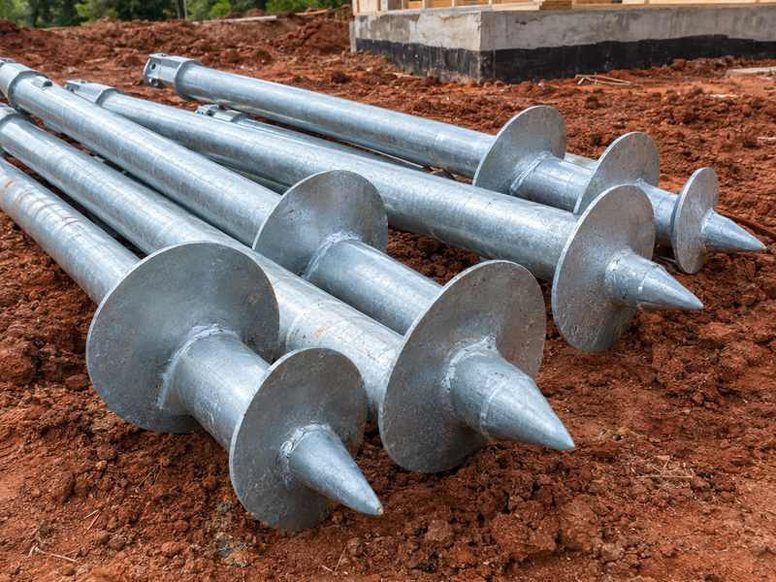
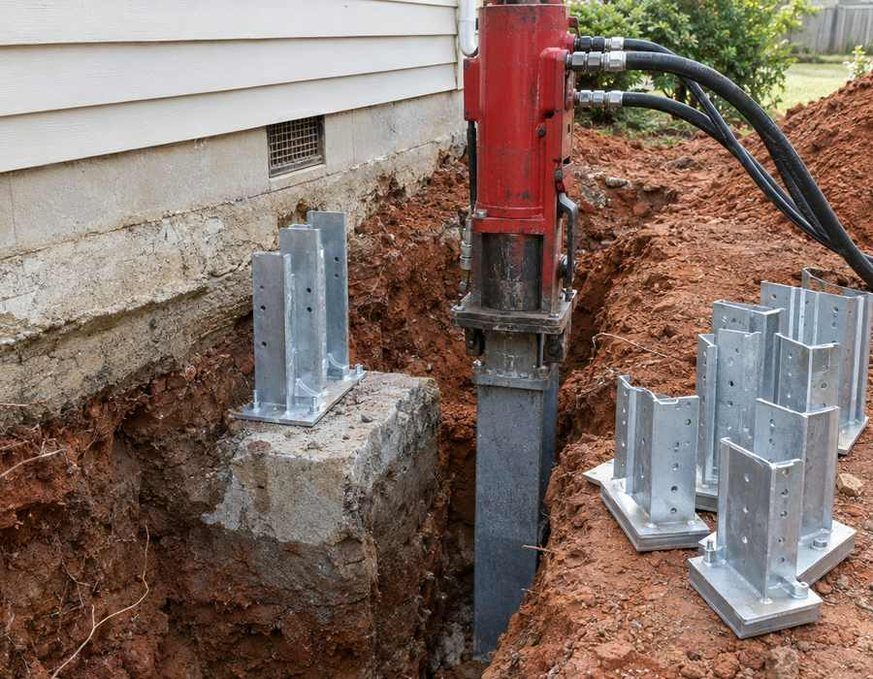
Helical piers are the workhorse of foundation repair on Asheville's variable mountain soils. Each pier is a steel shaft with helical plates that screws down through the weak, shifting saprolite until it reaches soil or rock that can actually carry the load. Because they are driven rather than poured, they install in most weather and start supporting the home immediately.
Once the piers reach capacity, we transfer the weight of the foundation onto them with brackets at the footing, which stops the settlement and, in many cases, lifts the home back toward level. For lighter structures, additions, and the deep, unpredictable soils common here, helical piers are often the right call over push piers.
We size and place the piers to an engineered plan, not a guess, and document the load each one reaches. That is what makes the fix permanent instead of temporary.
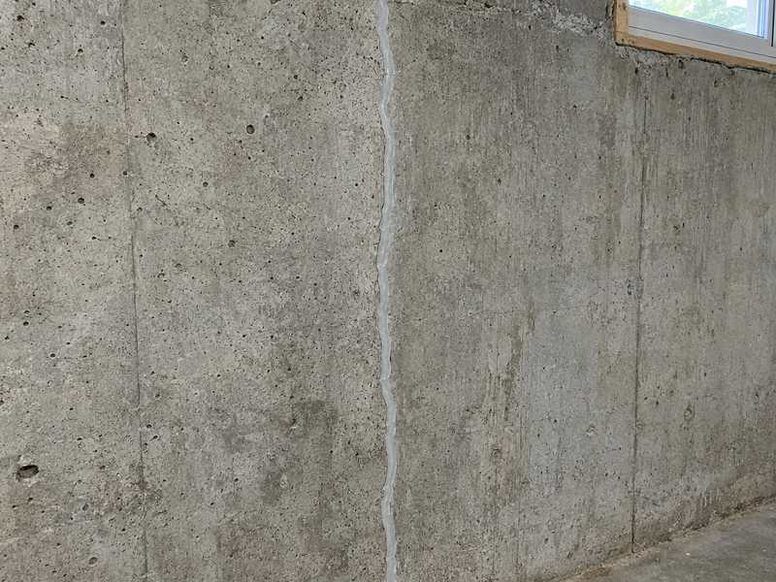
Not every crack is an emergency, but every crack is information. Thin vertical hairline cracks are often shrinkage; stair-step cracks in block, horizontal cracks, and cracks that leak or keep widening point to movement or soil pressure that needs real attention. We tell you straight which kind you have.
For cracks letting water in or that are structural, we seal them with epoxy or polyurethane injection, and where the wall needs more than a seal, we reinforce it with carbon-fiber straps that stop the crack from spreading. The goal is a dry, stable wall, not a cosmetic cover-up that reopens.
If the crack is a symptom of settlement, we address the cause too, because sealing a crack while the foundation keeps moving just buys a few months. A free inspection tells us which it is.
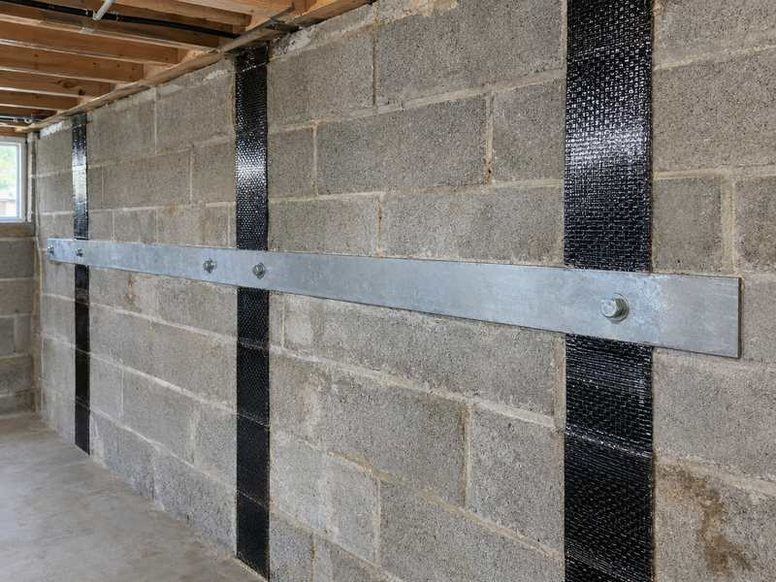
A basement or foundation wall that bows inward, leans, or shows a horizontal crack across the middle is under more pressure than it was built to hold. In the Carolinas that pressure comes from wet, heavy clay against the wall after the ground soaks up our heavy rain. Left alone, a bowing wall keeps moving until it fails.
We stabilize these walls with the method the wall needs: carbon-fiber straps for walls caught early, or steel I-beams and wall anchors for walls that have moved further. Each one braces the wall against the soil load and, with anchors, can often pull it back toward straight over time.
This is the one sign that should not wait. We inspect it for free, tell you how far it has gone, and give you the honest options before it becomes a wall replacement.
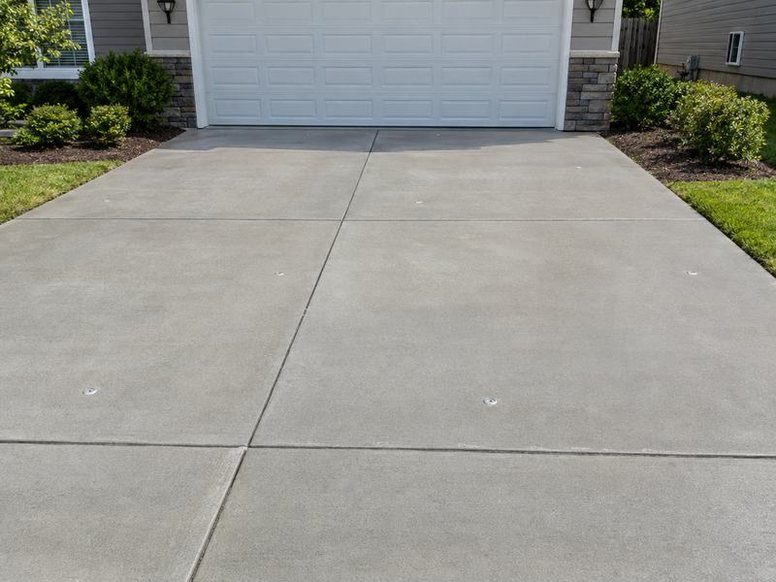
When a driveway, walkway, patio, garage floor, or pool deck sinks, it is usually the soil underneath that washed out or settled, not the concrete itself. On Asheville's slopes, runoff erodes the base under a slab and leaves a void, and the concrete drops into it, creating trip hazards and water that drains the wrong way.
We lift the slab back to level by injecting material through small ports that fills the void and raises the concrete from below, so you keep the slab you have instead of tearing it out and repouring. It cures fast and costs a fraction of replacement.
Leveling the slab also sends water back away from the house, which protects the foundation it sits next to. We confirm the slab is stable and draining right before we call it done.
A quick primer so you know the options and why we recommend one over the other.
The two main ways to stabilize a settling foundation are helical piers and push piers, and the right one depends on your home and your soil. Helical piers screw into the ground like a giant anchor and carry the load on their plates, so they work well under lighter structures and in the deep, variable saprolite around Asheville where solid bearing can be far down. Push piers are driven straight down using the weight of the house until they hit dense soil or rock, which makes them a strong choice for heavier homes. We use both, and we pick based on what your foundation and the ground under it actually need.
Not every foundation problem needs piers. A crack only letting in water gets sealed; a wall caught early while it is just starting to bow gets carbon-fiber reinforcement; a slab that sank gets lifted from below. Piers are for true settlement, when the footing has lost its support and the house is dropping. Matching the method to the actual cause is what keeps you from overpaying for a fix you do not need, or underfixing a problem that comes back. That is what the free inspection is for.
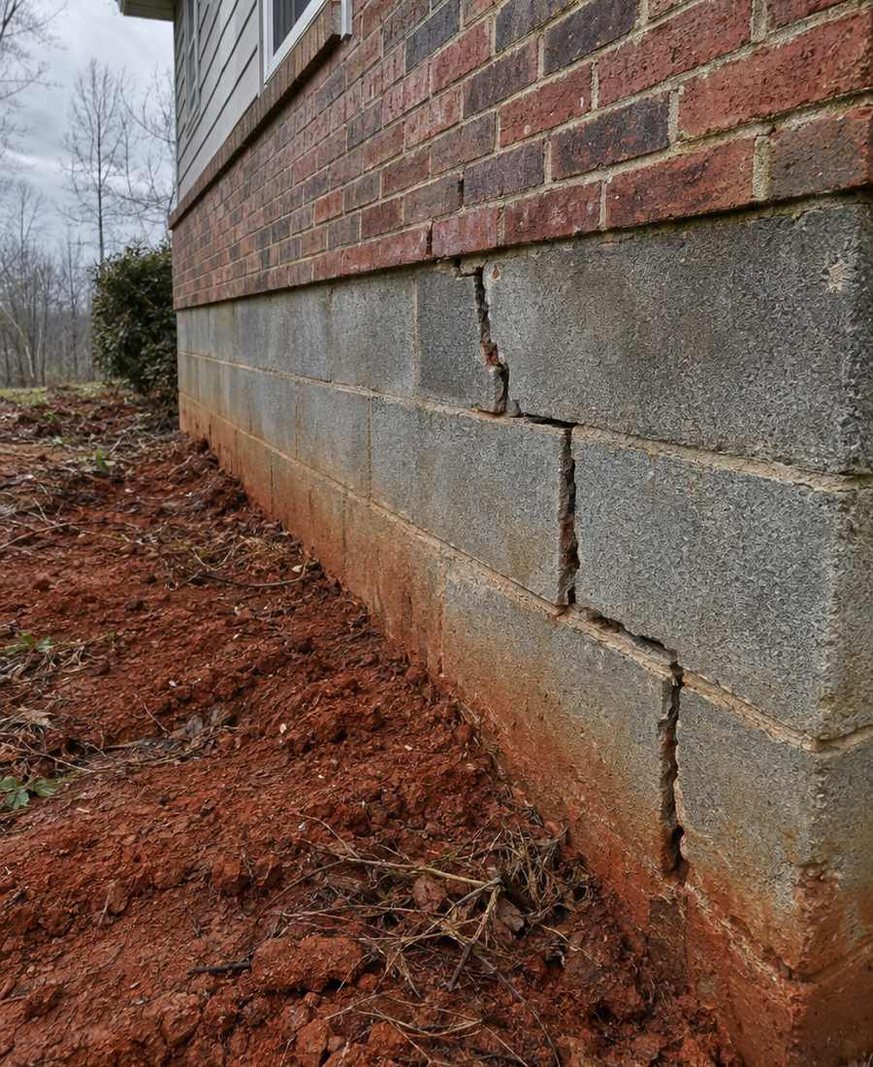
Foundation movement in the mountains is rarely about bad construction. It is about the ground a home sits on, and around Asheville that ground is working against your foundation in a few specific ways. Here is what is actually happening under a settling WNC home.
Most Asheville homes are built on a grade, and many are cut into the hillside with part of the lot filled back in. Soil on a slope does not stay put, it creeps slowly downhill under its own weight and after every heavy rain. When the ground beneath one side of a footing moves, that corner of the house settles with it, which is why mountain foundations so often drop unevenly.
Under most of the Blue Ridge, the bedrock has weathered in place into saprolite, the deep, soft, red-clay-rich soil the region is built on. It can run many feet thick, it holds water, and it compresses and shifts far more than solid rock. A footing resting on saprolite instead of stable bearing is sitting on ground that moves.
Western North Carolina is one of the wettest parts of the eastern US, and the storms here can dump water fast. Saturated clay swells, gets heavy, and loses strength, and runoff pouring down a slope erodes the soil out from under footings and slabs. Water is the single biggest trigger for foundation movement in these mountains.
Many Asheville homes are old, built on stone, brick, or shallow footings never designed for today's understanding of these soils. A footing that does not reach stable ground, or a stone foundation that has shifted over a century, keeps settling as the soil beneath it moves.
None of these go away on their own, because the slope, the soil, and the rain are permanent features of living here. The only real fix is to carry the weight of the home past the moving soil and onto ground that holds, which is exactly what helical and push piers do.
From the first inspection to a stable, warrantied foundation, here is how we work.
Every job starts with a free on-site inspection, not a price over the phone. We walk the home, measure the floors for elevation changes, map the cracks, and check the soil and drainage around the foundation to find what is actually moving and why.
We turn what we found into a clear diagnosis and a repair plan engineered for your home: how many piers, where they go and how deep, and whether any walls need reinforcement. On a structural job we work to an engineer's specs, not a guess.
You get a firm, itemized price in writing before any work begins, with the scope and options laid out. No hourly meter and no surprise add-on once the crew is on site.
Our crew drives helical or push piers to stable ground and lifts the home back toward level, reinforces walls, seals cracks, or levels a slab. Most residential pier jobs finish in a few days with minimal disruption to the yard.
We confirm the home is stable and the piers reached their rated load, restore the yard around the work, and leave you with the repair documented and a written, transferable warranty.
We are not a general contractor or a handyman adding foundation work on the side. Diagnosing and fixing foundations is the whole business, so you get a crew that reads settlement, slopes, and soil every day and installs piers and wall reinforcement as its core work, not a once-in-a-while job.
Every job starts with a free, no-pressure inspection, and we tell you straight what we find, even when the honest answer is that you do not need piers yet. If a crack is cosmetic or a smaller fix will hold, we will say so, and if the problem is serious, we will show you exactly why.
Foundation repair is structural work, so we fix it to an engineered plan with load-rated piers and proven reinforcement, not a patch. The repair is backed by a written, transferable warranty, which protects your home and its value if you ever sell.
We work on Western North Carolina foundations every day and know what the slopes, the saprolite, and the rain do to a home here. We size and place the fix for these mountain soils, not a generic flatland install.
Most foundation companies will not put a number on their site, because every home is different. We will give you honest ranges to plan around. A single crack repair is a few hundred to a couple thousand dollars; a full pier job runs into the tens of thousands depending on how many piers your home needs. These are planning ranges, and your firm price always comes from a free on-site inspection.
Per crack, sealed by injection. Structural cracks that need carbon-fiber reinforcement cost more.
Priced per pier installed. A settling home commonly needs 3 to 8 piers, so most pier jobs land in the mid five figures.
A complete stabilization, by pier count, wall repair, access on a sloped lot, and how far the home has moved.
What moves the price: the number of piers and how deep they have to go to reach stable soil, whether walls need reinforcement, how hard the lot is to access on a slope, the engineering the job calls for, and restoring the yard afterward.
These are typical Asheville-area ranges for planning, not a quote. Every foundation is different, so we price yours at a free on-site inspection before any work begins.
Straight answers to what we hear most on Asheville-area foundation inspections.
There is no flat rate, because it depends on what is wrong and how far it has gone. Minor crack repairs run about $400 to $1,200. Stabilizing a settling home with helical or push piers runs roughly $1,500 to $4,000 per pier, and most homes need several, so a typical pier job lands in the five figures. A full stabilization with wall repair can reach $30,000 or more. We give you a firm, itemized number at the free inspection, never a guess over the phone.
Look for movement, not just age. Stair-step cracks in brick or block, doors and windows that suddenly stick, floors that slope or bounce, a basement wall bowing inward, and gaps opening at the trim or chimney all point to a foundation that is moving. A single hairline crack is often nothing; several of these signs together, or any crack that keeps widening, is worth a free inspection before it gets worse.
It comes down to the ground. Asheville homes sit on steep slopes where soil creeps downhill, on deep saprolite and red clay that holds water and shifts far more than solid rock, and in one of the wettest regions in the East, where heavy rain saturates the soil and washes support out from under footings. Older homes on shallow or stone footings move the most. It is rarely bad construction, it is the mountain soil itself.
Usually not. Standard policies cover sudden, accidental damage like a burst pipe, but they specifically exclude foundation movement from settling, soil, and water, which is what most repairs address. If a covered event caused the damage, part of it may be covered, so it is always worth checking your policy, and we are glad to document what we find to support a claim.
Both carry your home's weight down to stable ground; the difference is how. Helical piers screw in and hold on their plates, which works well under lighter homes and in the deep, variable soils common around Asheville. Push piers are driven down by the weight of the house until they hit dense soil or rock, which suits heavier structures. We recommend one or the other based on what the inspection shows, not a default.
The best repair is the one matched to the cause. True settlement, where the footing has lost support, is fixed by piers driven to stable ground, which is permanent. A crack that is only leaking gets sealed; a wall that is bowing gets reinforced; a sunken slab gets lifted. The wrong move is a cosmetic patch over active movement, because it reopens. We diagnose the cause first, then pick the method.
In almost every case, yes. Foundation work happens from the outside and in the crawl space or basement, so you can stay in the home and keep living normally while we work. Most residential pier jobs take only a few days, and we keep the disruption to your yard and daily routine as small as possible.
It can be done year round here, but drier stretches make the work easier, since saturated ground and heavy mountain rain can slow excavation and slope access. More important than the season is not waiting: foundation movement only gets worse, and a problem that is a few piers today can become a far bigger repair after another wet winter.
Some cracks are harmless and some are warnings, and the pattern tells us which. Thin vertical hairline cracks are often just shrinkage. Stair-step cracks in block, horizontal cracks across a wall, cracks wider than about an eighth of an inch, and any crack that leaks or keeps growing point to real movement or soil pressure. If you are not sure, a free inspection settles it, and we will tell you honestly if it can wait.
Yes, every time. We walk the home, measure the floors, map the cracks, and check the soil and drainage, then explain in plain terms what is happening and give you a written price. No charge and no obligation, and if your foundation is fine, we will tell you that too.
We repair foundations for homeowners across Asheville, Buncombe County, and the surrounding Western North Carolina mountain towns.